Human Pet Store
The Vampire's Pet: Romantasy at its darkest (Blood and Kisses Chronicles : A Dark, Gothic Romance Series)The Human Pet Store is the establishment where Aleksander Dumoulin acquires Esmeralda, making it the decisive threshold between a political transformation and its intimate consequences. The store converts the Queen’s restored vampire-law regime into a physical scene: humans are confined, classified, displayed, accessorized, and purchased, while the language of pets conceals their status as captives and potential sources of blood. Its importance lies in the way an apparently ordinary shop gives institutional form to a society that has returned humans to the bottom of the food chain.
Emergence Under the Restored Laws
The store appears after the Queen reinstates the old vampire laws and human breeding farms open throughout Ichoryllia. The city’s public landscape has changed sharply: humans who once worked in blood banks are no longer visible in the streets, and the new system is enforced against dissent through violence or death. The speed with which the farms and related institutions appear suggests that the policy had been prepared before its public announcement. The Human Pet Store therefore belongs to a wider apparatus rather than standing as an isolated business; it is one commercial expression of a governmental reversal that presents predation as social order.
The store also occupies a contradiction within Aleksander Dumoulin himself. He accepts the claim that humans should no longer be treated as equals and feels his old predatory instinct awaken under the new laws, yet his family had traditionally preferred Blood Wine. His mother had taught him that vampires had advanced beyond the ancient period in which humans were nearly exterminated, warning him against repeating those dark times. The Human Pet Store becomes the place where that inherited restraint confronts the newly legalized appetite. What had been a political principle becomes a consumer decision.
Appearance and Operation
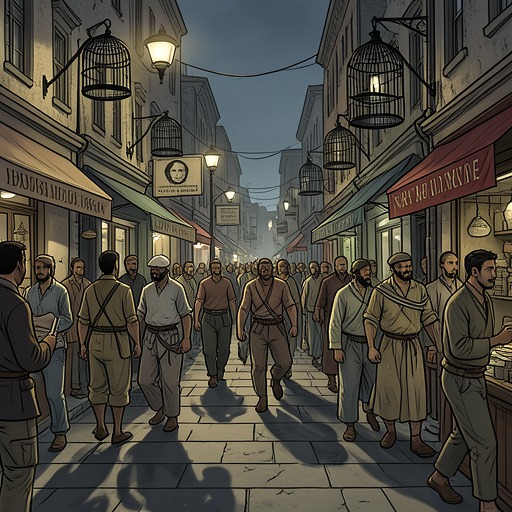
Aleksander reaches the shop two days after seeing Jason at the castle and recognizing that a mature human could not have come from a breeding farm, since those farms would produce only babies for another twenty years. The alternative is the pet market. His route passes the tavern, a blood bank, and several shops before he reaches a relatively small building with a handwritten sign. The location’s former purpose makes the institution especially stark: it once sold merchandise for humans, but now it sells humans themselves. The change in use condenses the regime’s transformation from ordinary commerce into the commodification of bodies.
Inside, the shop is dimly lit and smells of urine. Cages line the walls, and each contains a human, straw, a bowl of water, and scraps of food. Some captives sleep, while others cling to the bars in panic. The arrangement gives the store the visual grammar of an animal market, but the occupants are adult humans who have been captured rather than bred there. The owner explains that they were all caught in the city; the farm-produced humans are still only babies. This distinction reveals a supply chain divided between immediate capture and delayed reproduction, with the store serving as the retail point for mature bodies.
The proprietor is an aged, well-dressed vampire with a carefully combed hairstyle and a curled mustache, a presentation that contrasts with the filth of the premises. He recognizes Aleksander as Lord Dumoulin and greets him with the polished courtesy of a noble shopkeeper. When Aleksander criticizes the store’s untidiness, the owner blames the pets for urinating outside their cages and promises that he is working on the problem. The exchange treats sanitation as the central defect while leaving confinement and captivity unquestioned, showing how the institution normalizes violence by framing humans as troublesome merchandise.
Selection, Display, and Sale
The humans are displayed according to a buyer’s appetite. Aleksander examines them as healthy adults, noting that most are women. He rejects a pot-bellied, greasy-haired man because of his appearance and passes two attractive women without feeling drawn to either. A young man with long, curly brown hair, blue eyes, and freckled skin briefly interests him, but Aleksander continues searching. The sequence turns human individuality into a retail category: physical traits become inventory, and the buyer’s private response determines value.
Esmeralda stands apart from the other captives. At the back of the store, she has long black hair and large brown eyes marked by defiance. Aleksander believes that centuries of craving fresh blood have taught him to recognize prey at a glance, yet his perception of her exceeds simple hunger. He notices that her dirty rags are torn and feels disgust at the owner’s treatment of his merchandise. The moment contains both recognition and possession: Esmeralda appears to him as unusually resistant, but that resistance intensifies his desire to claim and tame her rather than leading him to question the system that confines her.
When Aleksander asks her name, the owner objects to addressing the captives directly. Esmeralda nevertheless gives her name in a trembling whisper. Aleksander repeats it and immediately decides to take her. His response makes naming part of the purchase: the name does not restore her autonomy, but becomes something he feels belongs to him. When Esmeralda screams in protest, he contrasts the shop’s cage with the supposed safety of his ownership, asking whether she would prefer to remain in a store that reeks of urine. Her refusal is not treated as a rejection of the transaction; it becomes another circumstance that the buyer interprets and controls.
The sale includes more than the body itself. The owner offers collars, leashes, toys, clothes, and other accessories, and Aleksander selects a black collar decorated with pearls and lace and centered on a large black gemstone, together with a long black leather leash. The objects transform captivity into a managed domestic role. The collar is not merely functional: its decorative design makes ownership presentable, even elegant, while the leash preserves the coercive structure beneath that appearance. Aleksander’s approval of the accessories also links aristocratic taste to the marketplace of human possession.
The Collar and the Shop’s Afterlife
Back at the cage, Aleksander orders Esmeralda to put on the collar. He is attracted to the rebelliousness in her eyes and openly wants to tame her. When she hesitates, he tells her, “Whether you like it or not, you’re mine! Now obey and put this collar on.” She eventually fastens the leather around her neck, and he praises her as “a good girl.” The shop thus supplies the material and symbolic equipment for a relationship founded on ownership, obedience, and unequal power. Its merchandise continues to govern the encounter even after the purchase is complete.
The institution’s logic remains active outside its walls. Aleksander tells Esmeralda that without the collar and leash, surrounding vampires would devour her. She moves close to him, and the scent of her blood enthralls him; he imagines that she will be delicious. The protection he offers is therefore inseparable from the danger he represents. The shop has not removed Esmeralda from predation so much as transferred her from collective commercial vulnerability to the private possession of one powerful vampire.
That transfer later becomes the basis of violent possessiveness. When another vampire attacks Esmeralda, Aleksander responds with the principle, “Nobody touches what’s mine.” He fights despite being stabbed in the shoulder and continues beating the attacker until the vampire is badly disfigured. The phrase reveals the lasting imprint of the shop’s transaction: Aleksander’s defense of Esmeralda is emotionally intense and may place himself in danger, but it is articulated through property language. Only much later, when Alyson identifies the bond between Aleksander and Esmeralda as a fated-mate bond and Esmeralda returns to his arms, does their connection acquire a meaning that exceeds the store’s categories. The Human Pet Store remains the point of origin for that transformation, a place where a system of capture first names intimacy as ownership and where the novel begins testing whether attachment can survive the language of possession.